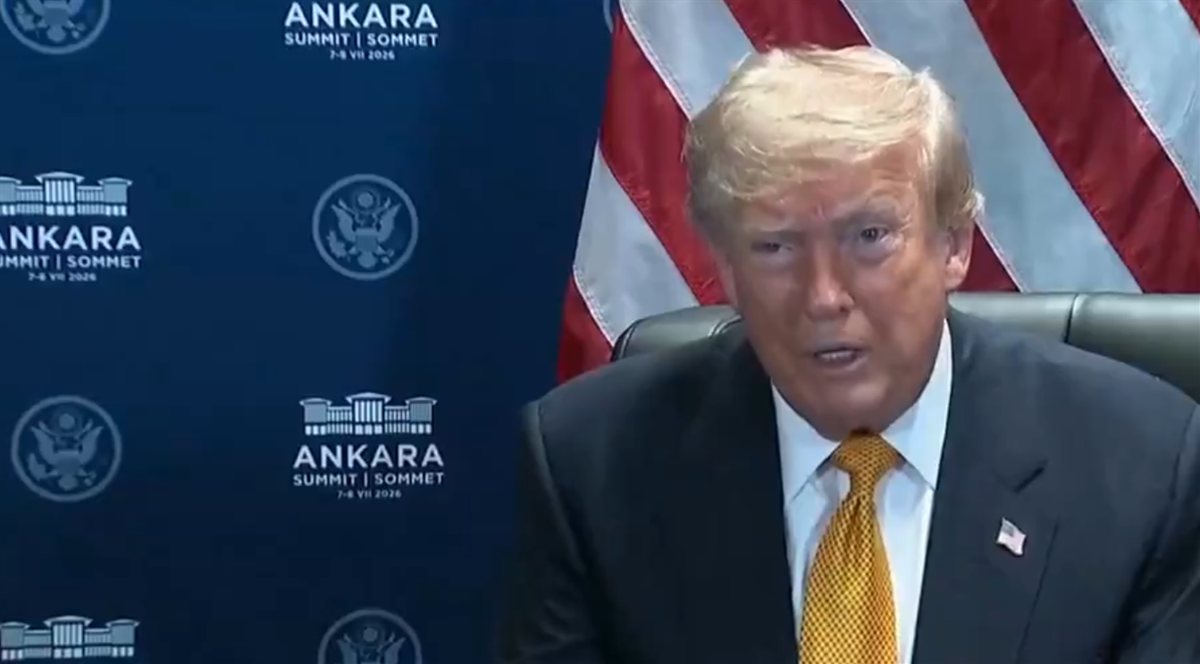
The interim ceasefire between the United States and Iran collapsed overnight into Wednesday, and by the time NATO's leaders gathered in Ankara, the two countries were trading strikes across the Gulf again.
US Central Command said it had launched "a series of powerful strikes" against Iran late on Tuesday, then a second wave it said hit more than 80 targets. The stated trigger was an attack on three commercial vessels transiting the Strait of Hormuz, which Washington and Gulf states blamed on Iran. CENTCOM called the shipping attacks "unwarranted, dangerous, and a clear violation of the ceasefire."
Iran answered in kind. Its Revolutionary Guard said it had fired missiles and drones at 85 US military sites, naming Salman Port, the US Navy's Fifth Fleet headquarters in Bahrain, and the Ali Al-Salem base in Kuwait. The Iranian army went further, warning through the state broadcaster IRIB that every US base in the region was now a "legitimate target" for its drones. Kuwait and Bahrain said their air defenses intercepted the incoming missiles and drones, and air-raid sirens sounded in both.
"As far as I'm concerned, it's over"
Speaking in Türkiye ahead of the summit, Trump declared the deal finished and did not soften the language. He called Iran's leadership "scum" and "cuckoo," "vicious, violent people," and said his negotiators could keep talking "if they want," though he saw it as "a waste of time." Asked whether talks would resume after the Iranian supreme leader's funeral, he said, "I don't care."
Oil moved on his words, up about 6%, though it stayed below the peaks reached in June when the strait briefly closed. The US Treasury revoked the license that had let Iran sell oil under the deal, and an official told CNBC the arrangement was "entirely performance-based" and that Iran's conduct in the strait "will be met with consequences."
Tehran put the blame back on Washington. Parliament speaker Mohammad Bagher Ghalibaf said the US had breached the memorandum the two sides signed on 17 June, a 14-point document that called for an immediate and permanent end to military operations and safe passage for commercial ships. "The era of bullying and extortion is over," he said. "We don't fold."
A truce that never fully held
The June deal was fragile from the start. Washington had already struck Iran once after it was signed, on 25 June, when an Iranian projectile hit a cargo ship in the strait, and both sides stood down four days later. This week's exchange was the sharpest since the interim agreement, which was meant to end a war that began with US and Israeli strikes on Iran and killed the country's supreme leader, Ali Khamenei, on its first day. His funeral rites moved through Iraq on Wednesday, with burial set for Mashhad on Thursday.
For the host of the NATO summit, the timing was pointed. Türkiye had spent the week warning that the truce was fragile, with Erdoğan cautioning against attempts to "dynamite" the deal that Qatar and Pakistan brokered. The war then reached into the summit itself. Trump used the occasion to scold the NATO allies who had refused to back the United States during the Iran conflict, asking why Washington spends so heavily on an alliance whose members would not stand with it.
The Gulf states lined up to condemn the strikes on their soil. The Gulf Cooperation Council, along with Jordan, Egypt, Oman and Qatar, denounced the Iranian attacks on Bahrain and Kuwait, and Qatar, one of the deal's brokers, urged both sides back to the 17 June text.
Whether anyone returns to it is now an open question. The negotiators are still in place. Their president has said he is done.