Türkiye's place in the Iraqi oil business has been the pipeline running across it. On Tuesday it bought a share of the oil itself.
Turkish Petroleum, the state producer known as TPAO, took a 15% stake in BP's Kirkuk company under an agreement signed at the Energy Ministry in Ankara on 28 July 2026, hours before President Recep Tayyip Erdoğan received Iraqi Prime Minister Ali al-Zaidi. TPAO's general manager, Cem Erdem, signed alongside Andrew McAuslan, BP's vice president for upstream business development, with Energy Minister Alparslan Bayraktar attending.
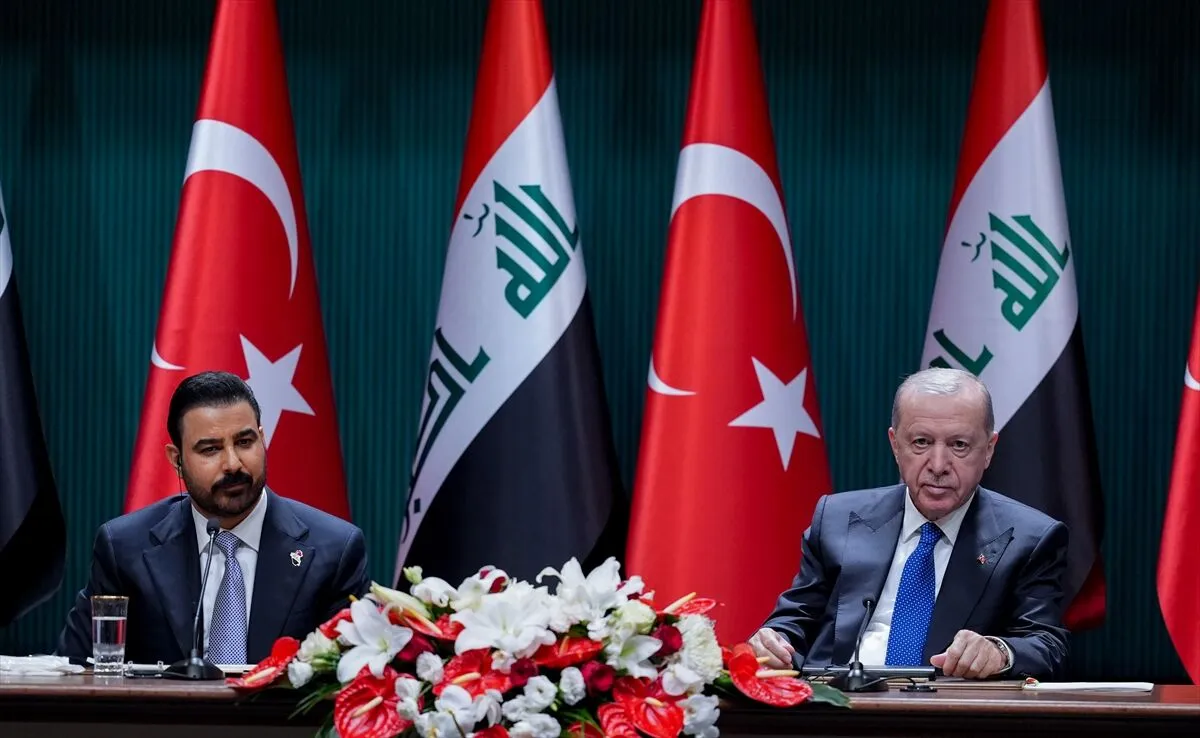
At a joint news conference with al-Zaidi later, Erdoğan said a partnership in the Kirkuk production field, which BP operates, had been given to Turkish Petroleum. He called the agreement signed that day "a historic step in terms of partnership in the energy sector."
What TPAO has bought into is substantial. The company holds the concession over the Baba and Avanah domes at Kirkuk and the Bai Hassan, Jambur and Khabbaz fields, acreage the Turkish Energy Ministry assesses at more than 3 billion barrels of oil equivalent in its first phase, with further exploration potential beyond that. The National, describing the same holding under the name BP Energy Company of Kirkuk Limited, reported on 17 July 2026 that ConocoPhillips was taking 42% of it, and put current production at the Kirkuk field at around 300,000 barrels a day. Bayraktar described the result as a consortium of ConocoPhillips, BP and Turkish Petroleum working together to develop the reserve and lift output.
Bayraktar said why Ankara wanted in. The deal is "one of our most important steps toward making Turkish Petroleum a company producing 1 million barrels a day of oil and natural gas," he said after the signing, describing what he wants the company to become rather than what it is.
The pipeline is the unfinished part.
The agreement under which Iraqi crude crosses Türkiye to the Mediterranean at Ceyhan expired on 27 July 2026, the day before the signing. Its replacement, a 12-month transport protocol to be signed by the state pipeline operator BOTAŞ, was still unsigned in mid-July, held up because Baghdad wanted 750,000 barrels a day of reserved capacity on a line then carrying closer to 200,000. Bayraktar has said Türkiye told Baghdad a year ago that it would not renew the 2010 pipeline agreement at all and wants a comprehensive new one instead. Erdoğan raised it himself. The Iraq-Türkiye crude oil pipeline agreement ended as of the previous day, he told the news conference, and Ankara's aim now is to sign a comprehensive energy cooperation agreement serving both sides as soon as possible.
The older dispute is also still running. Türkiye halted flows in March 2023 after an arbitration tribunal found it had breached the 1973 pipeline agreement by allowing Kurdistan Regional Government crude to export without Baghdad's approval, an award reported at roughly $1.4 billion. Crude did not move again until around September 2025. Bayraktar has said Türkiye lost its bid to annul that award in Paris, that an enforcement case continues in Washington, and that a separate arbitration covering the years after 2018 has not concluded.
So Ankara owns a share of the oil coming out of the ground in Kirkuk while the agreement for moving it across Türkiye has lapsed, and the replacement is still being described as a goal.
Then came a larger number. Speaking through an interpreter, al-Zaidi said Iraq could supply Türkiye with 1 million barrels of oil a day. Erdoğan took it up from across the table: there is no need to depend on this side or that, he said, and if that million barrels were transferred here from neighboring Iraq it would meet Türkiye's need. No agreement to that effect was announced, and the figure is roughly three times what the Kirkuk field produces today.
Trade Minister Ömer Bolat met his Iraqi counterpart, Mustafa Nizar Jumaa, and the two governments reaffirmed a medium-term target of $30 billion in trade. Erdoğan put last year's trade with Iraq at close to $17 billion, which is the distance that target has to travel. Bolat tied it to folding the Ibrahim Khalil border gate into Iraq's ASYCUDA customs system and to the Development Road Project, the corridor Ankara wants running from Basra through Iraq and out to Europe. A third meeting of the two countries' joint economic and trade committee is set for Türkiye in the last quarter of 2026.
Erdoğan said he and al-Zaidi went over Iran, Syria and Palestine, that Türkiye is ready to supply Iraq with defense industry products, and that Ankara stays in close contact with Baghdad on what he calls the terror-free Türkiye process. Bayraktar met Iraq's oil and electricity ministers separately.
The 15% is signed and dated. The comprehensive energy agreement Erdoğan says Ankara wants is the one still to be written.
Corrected on 28 July 2026: an earlier version said Tuesday's announcements did not address the pipeline transport protocol. Erdoğan raised the expiry of the Iraq-Türkiye crude oil pipeline agreement at the joint news conference and described a comprehensive replacement as the aim. The article has also been updated with al-Zaidi's offer of 1 million barrels a day and Erdoğan's response, and with last year's trade figure.