Update: After this piece was published, the de-escalation Fidan was working toward began to show. Iran privately told US officials that the firing on ships in the Strait of Hormuz had been a mistake, the work of a hardline faction trying to wreck the talks, and asked to keep negotiating, ABC News and CBS News reported. Trump directed his team to continue, with a round set for Oman. Washington still wants Tehran to say as much in public. The argument is not over, but for the first time in a week it is being had at a table.
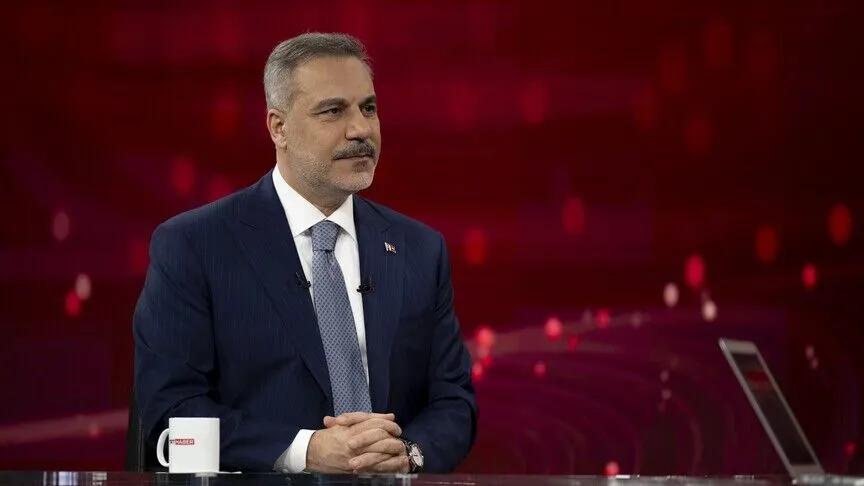
Hakan Fidan gave himself a deadline he did not control. In a television interview on Thursday, Türkiye's foreign minister said the dispute over the Strait of Hormuz, the fault line that broke the US-Iran truce this week, could be settled by the weekend. The weekend came. What it settled was that the gap is wider than a phone call can close.
Fidan had reason for the forecast. He is one of the few officials talking to every side at once, and he had just spent a long call with his Iranian counterpart, Abbas Araghchi, who phoned to explain Tehran's reading of what went wrong. The problem, as Fidan described it, was narrow and fixable: the memorandum the two sides signed in Islamabad on 14 June set the strait's reopening as a condition, but left the passage rules vague enough that each side read them differently, and the reading turned into gunfire. Fix the wording, he suggested, and the crisis eases. Araghchi was heading to Oman at the weekend to try.
Araghchi got there. He landed in Muscat on Saturday, and Iran's state agency said the strait was among the issues on the table. US officials, briefing a small group of reporters, called the recent talks with Tehran "productive."
Then the harder reality set in around the diplomacy.
Washington, those same officials said, now wants something specific, and it wants it said out loud: a public statement from Iran that it will not fire on commercial ships in the strait, and that it will keep every transit open. Tehran's answer was not that. Iran's Foreign Ministry warned that any American breach of the memorandum would draw "reciprocal action." Araghchi went further on X, writing that the United States had already broken the deal, that Iran "kept its word, unlike the so-called US Treasury Secretary," and that the memorandum only holds if both sides comply.
The numbers hardened too. Iran's Health Ministry put the toll from the American strikes of Wednesday and Thursday at 17 dead, including a woman, and 115 wounded.
And then there was Trump. After crowds at the funeral of Iran's late supreme leader Ali Khamenei chanted for the American president's death, Trump posted on Truth Social that "1000 Missiles are Locked and Loaded and aimed at" Iran, with "thousands of more to immediately follow," if Tehran acted on any threat to kill him. Orders, he wrote, "have already been given." It is a threat typed into social media, and that is the register the week is being conducted in.
There is one detail that complicates the whole picture, and it is worth stating plainly because it points at how thin the ground is. Axios, citing a source from one of the mediating countries, reported that the ship attacks in the strait may not have been a decision of the Iranian state at all, but the work of factions inside the regime who oppose the memorandum and want it dead. If that is right, then the thing Fidan is trying to negotiate a fix for is partly a fight inside Tehran that no outside minister can settle by phone.
Türkiye, for its part, keeps dialing. Fidan spent Friday on calls with his Egyptian and Jordanian counterparts on the same regional file. Ankara's value in these weeks is exactly that it will talk to Washington and Tehran and the Gulf capitals in the same afternoon, and relay what it hears. That is real, and it is why Fidan could speak with any confidence about a weekend fix.
Access is one thing. The power to move the parties is another. Over 48 hours the meeting he pointed to happened, and the distance it was meant to close grew instead. The weekend he named as a deadline has arrived, and the strait is still an argument with live ammunition in it.