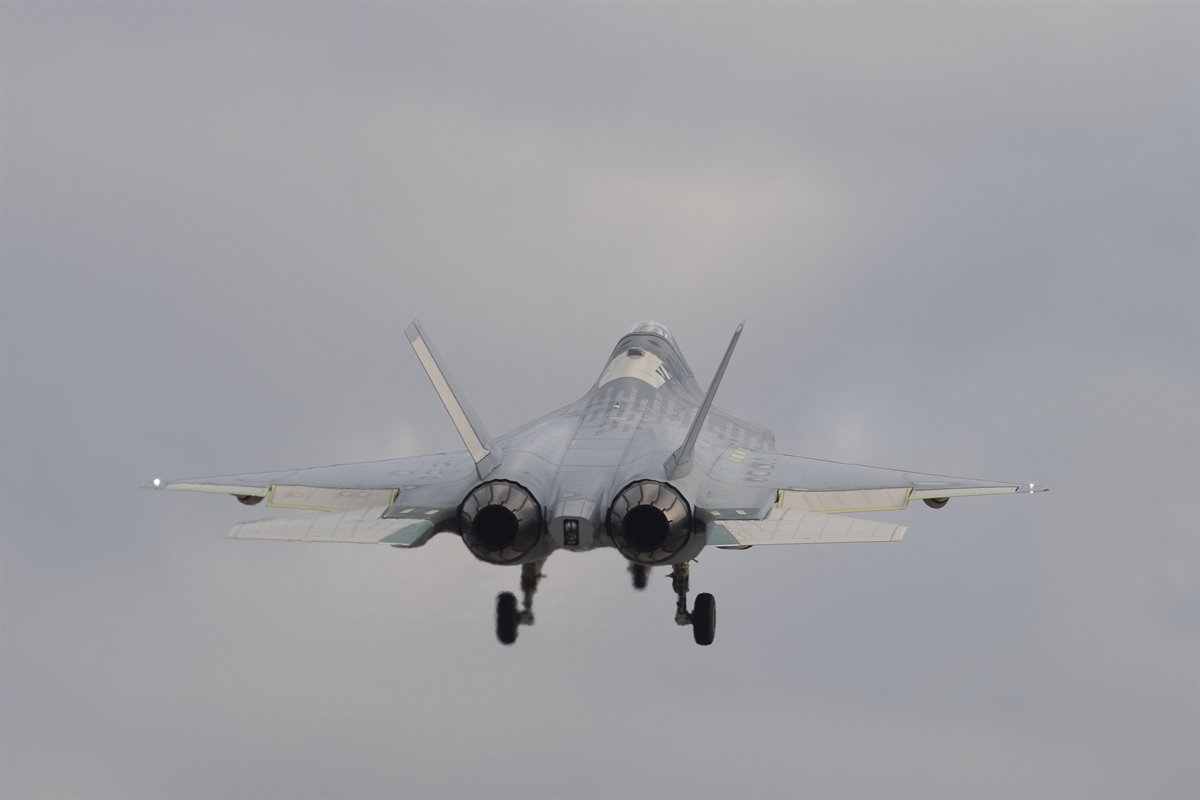
The congressional record for H.J.Res.200 runs to two lines. Introduced in the House on 2 July 2026. Referred to the Committee on Foreign Affairs the same day. Nothing follows.
That resolution was the last instrument available inside the review window to stop the United States from selling Türkiye the engines that will fly KAAN. On 9 July the 15 days ran out with the measure still sitting in committee, untouched. The sale proceeds.
The State Department notified Congress on 24 June. By Anadolu Ajansı's account the notification covers the work around the F110-GE-129E/F engines: integration, assembly, external modification, certification, testing, defense services and the transfer of technical data. The War Zone and FlightGlobal put the wider package at more than $700 million and an initial 80 engines. The Turkish agency gives no figure at all.
Major arms sales to NATO allies carry a 15-day congressional review. Inside that window any member may introduce a joint resolution of disapproval. For it to bite, the House and the Senate must both pass it, and then the president has to sign it. The president in question is the one whose administration proposed the sale. A veto sends the resolution back needing two-thirds of both chambers, which is 290 votes in the House and 67 in the Senate.
So the resolution had to clear a committee, reach a floor, win two chambers and survive a veto, all inside 15 days. It cleared nothing. It reached no floor. Representative Dina Titus of Nevada filed it with eight cosponsors: Chris Pappas, Bradley Schneider, Josh Gottheimer, Mike Quigley, Jim Costa, James McGovern, George Latimer and Brad Sherman. Sherman, Titus, Pappas and McGovern have opposed Turkish defense exports before, including the F-16 sale.
Then two more names arrived. Representatives Robert Menendez and Frank Pallone, both of New Jersey, added their signatures on 9 July, the day the window shut and the resolution became a dead letter. The record gives their dates. It does not give their reasons.
The real fight happened earlier, out of sight. Before a sale reaches formal notification it passes an informal review by the leaders of the two foreign affairs committees, and that quiet stage is where arms sales to Türkiye have often stalled. The War Zone reported that Gregory Meeks, the ranking Democrat on House Foreign Affairs, refused to clear this one, and that the administration meant to override him. It did. By the time Titus filed, the sale had already survived the stage that actually kills things.
Israel spent those same weeks arguing about a different aircraft.
Finance Minister Bezalel Smotrich told the newspaper Yedioth Ahronoth that Israel had worked both openly and behind the scenes to keep F-35s away from Ankara, holding intensive talks with Trump, and said Erdoğan should not be permitted weapons that would change the rules of the game. He called Erdoğan a dangerous man and Türkiye, as it stands, a serious threat to Israel. Foreign Minister Gideon Saar has said publicly that Washington must preserve Israel's qualitative military edge in the region. Netanyahu, speaking at an Israeli military graduation ceremony, called air superiority a cornerstone of Israeli security doctrine and did not name Türkiye once.
The F-35 is a separate file, and it has not moved.
Türkiye was removed from that program in 2019 for buying the Russian S-400, and sanctions followed. Standing beside Erdoğan at the NATO summit in Ankara this week, Trump said he would lift them and would consider Türkiye's return. That was a sentence spoken at a podium, and a sentence at a podium is not an export license.
Ankara gave its own read on the day the window closed. Foreign Minister Hakan Fidan, interviewed on TRT, said Türkiye is taking the necessary steps to resolve the CAATSA sanctions and expects to reach a conclusion soon, adding that he did not think there would be any problem. He also said other countries had been lobbying Washington against Türkiye, a rare on-record nod from Ankara to the campaign Israeli ministers have run in the open.
The engines are the thing that moved. KAAN, the fighter built so Türkiye would not have to buy anyone else's, will fly on American turbofans, cleared because a resolution sat in a committee for seven days and nobody called it up. Technical and commercial talks turn next to delivery schedules, integration and certification.