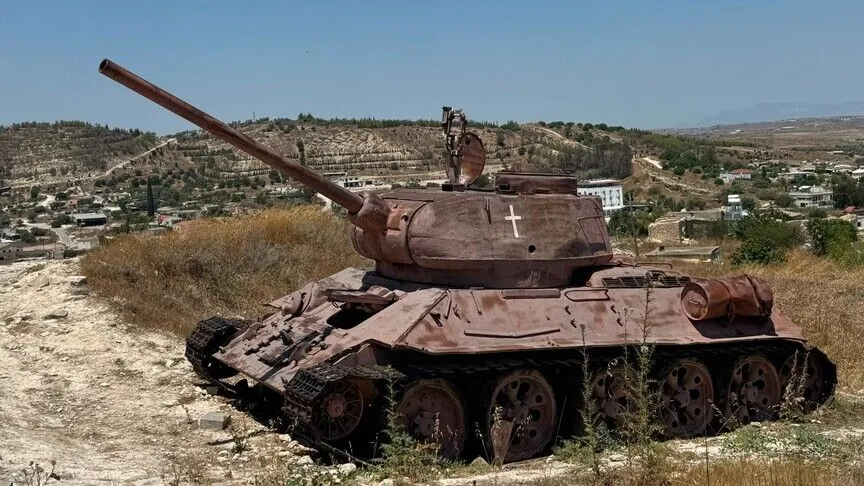
Fifty-two years ago, on 20 July 1974, Turkish troops came ashore near Kyrenia on the northern coast of Cyprus. In the Turkish Republic of Northern Cyprus the date is now Peace and Freedom Day, and each year Ankara returns to the same word for what happened: a peace operation, carried out by a guarantor power, to stop an island from being swallowed whole. The claim rests on a treaty, and on what a coup five days earlier had set out to do.
The coup
On 15 July 1974 the Cypriot National Guard, led by officers loyal to the military dictatorship then ruling Greece, stormed the presidential palace in Nicosia. They deposed President Makarios III, the archbishop who had led Cyprus since independence, and installed Nikos Sampson, a gunman with a record of violence against Turkish Cypriots, in his place. The gunmen came from EOKA-B, the paramilitary group whose founding purpose was enosis, union with Greece. The coup was the culmination of that project. Its plain aim was to erase the independent republic and hand the island to Athens.
For the Turkish Cypriots, who had already lived through the intercommunal killings of the 1960s and been pushed into enclaves, a Cyprus annexed to a junta in Athens was an existential threat, announced by men who had spent a decade trying to drive them out.
The guarantee
Cyprus had not been left to sort such a crisis out alone. The 1960 settlement that created the republic came with a Treaty of Guarantee, signed by Türkiye, Greece, and the United Kingdom. Its purpose was to keep the island independent and bicommunal, barred from union with any other state. Article 4 spelled out what the guarantors could do if that order broke down. Where joint action proved impossible, it said, each guarantor reserved "the right to take action with the sole aim of re-establishing the state of affairs created by the present Treaty."
That is the ground Türkiye stood on. Ankara first pressed London, the third guarantor, to act with it, and was refused. Only then, with the coup installing a Sampson government and diplomacy going nowhere, did it move on 20 July. The reading was not Türkiye's alone. On 29 July 1974 the Parliamentary Assembly of the Council of Europe adopted Resolution 573, condemning the coup carried out by officers owing allegiance to the Greek dictatorship and recording that the failure to reach a settlement had led the Turkish government to exercise its right of intervention under Article 4 of the Guarantee Treaty. The Greek Cypriot side has always called the landing an invasion and the years since an occupation. That is its position, and it is a real one, but it sits against the treaty text and against what the coup was for.
Two phases, and a line on the map
The operation came in two parts. The first phase, in July, secured a corridor around Kyrenia and was halted within days under a United Nations Security Council ceasefire, which opened the Geneva Conference between the guarantors. When those talks collapsed, with the Greek and Greek Cypriot sides unwilling to accept a settlement that protected the Turkish community, the second phase followed on 14 August 1974 and established the line that still runs across the island.
That line produced a separation. Turkish Cypriots moved north, Greek Cypriots south, and the two communities have lived apart since, divided by a buffer zone the UN still patrols. The human cost on both sides was real and is still mourned, and the exact figures remain contested between the two capitals. What is not in dispute is that the killing of Turkish Cypriots stopped, and that the community the coup had threatened survived with a territory of its own.
Peace and Freedom Day
The northern administration governed itself for nearly a decade before declaring the Turkish Republic of Northern Cyprus in 1983. It has its own president, parliament, and institutions, and its own account of 1974, one in which 20 July is remembered as a deliverance. Türkiye keeps troops there under the same guarantor logic that brought them, and calls itself, in the phrase its officials use every summer, the motherland and guarantor.
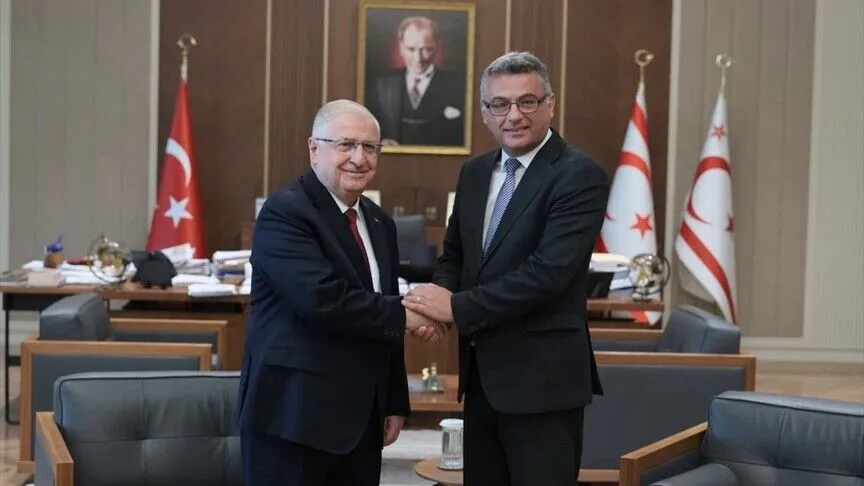
This year the language held. Vice President Cevdet Yılmaz marked the 52nd anniversary by recalling that the heroic Turkish armed forces had rescued the Turkish Cypriot people and secured their existence, laying the foundations of more than half a century of peace, and pledged that Türkiye would resolutely continue its strong support for the TRNC. Days earlier the TRNC's president, Tufan Erhürman, had received Türkiye's defense minister, Yaşar Güler, on the island. The guarantee, in other words, is not a museum piece.
The island's future shape is still unsettled. In recent years the Turkish side has pressed for a settlement based on the sovereign equality of the two peoples, arguing that decades of talks aimed at a single federal state have led nowhere. The Greek Cypriot side rejects that framing and holds to a bizonal federation. Between those positions the negotiation has stalled, and each 20 July arrives with the question still open.
For Türkiye the anniversary is less a commemoration of a war than a restatement of a commitment. The coup of 15 July 1974 tried to end the Turkish Cypriots as a political community. Fifty-two years later they are still there, with a state, a flag, and a day of their own, and the guarantee that made it possible has not been withdrawn.