Analysis. A reflection on the record, and on the history behind a single word.
Days before Türkiye hosts the NATO summit, Özgür Özel did it again. He published another op-ed in a Western newspaper, this time the Financial Times, warning the country's allies about Erdoğan's government. The AK Party answered with a word of its own, one President Erdoğan had aimed at Özel back in March 2025: mandacılık. In English it comes out bloodless, "mandate-seeking." In Turkish it is one of the heaviest charges in the language, and it lands, with some precision, on the party of Mustafa Kemal Atatürk.
A word with a history
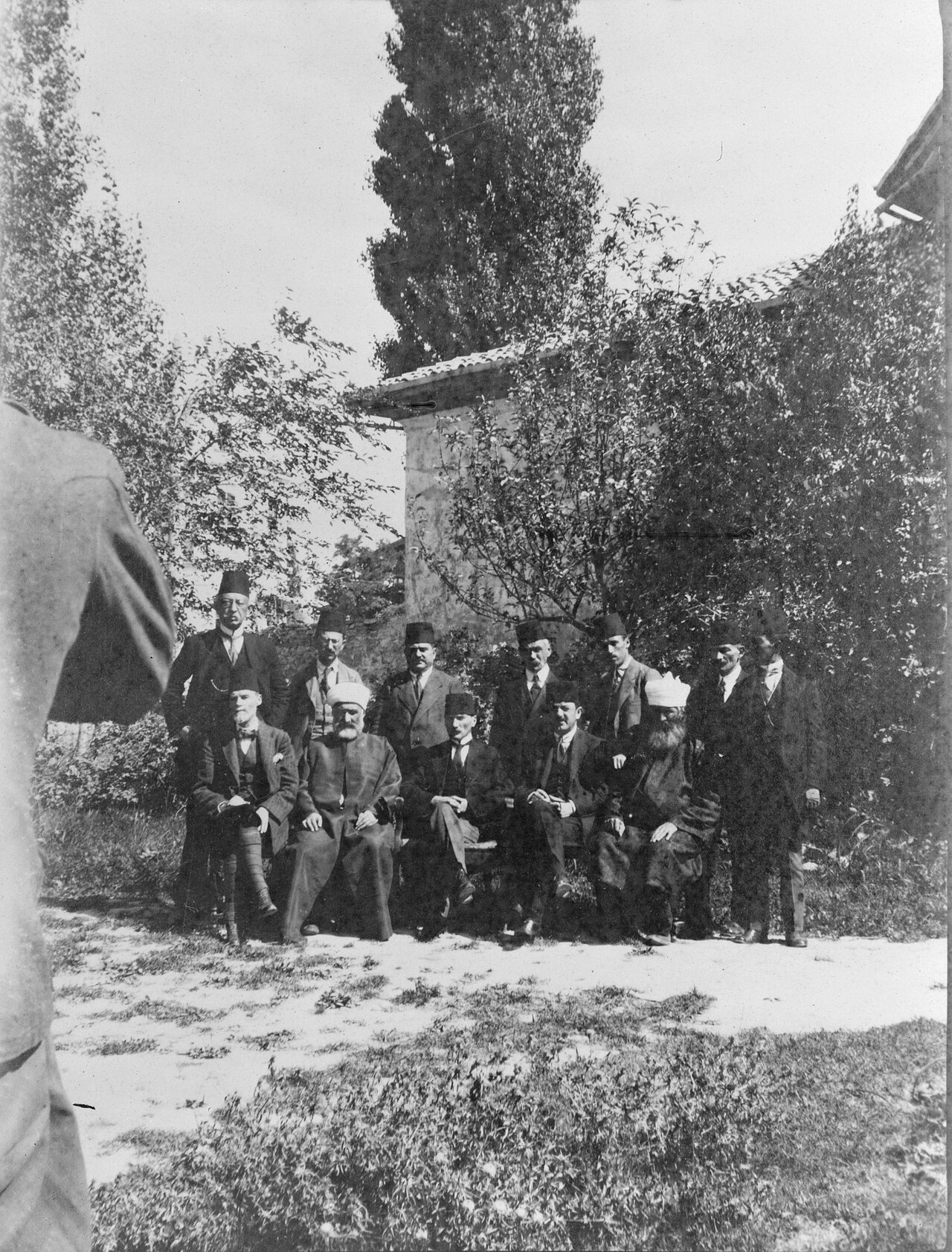
The Republican People's Party is the oldest in Türkiye, founded by Atatürk in 1923 out of the movement that had just won the War of Independence. That war turned, in part, on this very question. At the Sivas Congress in 1919, with the Ottoman state occupied and carved up, one faction argued that the safest path was to accept a foreign mandate, an American or a British protectorate, to shelter what remained of the country. Atatürk and the national movement refused. They chose full independence and built the Republic on a sentence still fixed above the floor of Parliament: sovereignty belongs, without condition, to the nation. The word for a man who wanted the mandate, mandacı, became a word for national surrender.
So when a government throws that word at the face of Atatürk's own party, the sting is deliberate. It says that the party of independence has forgotten what it was for.
The record
Has it? The record is worth reading before answering. Özel has, more than once, carried Türkiye's domestic fight to foreign audiences. The sharpest instance came in March 2025, days after the arrest of İstanbul Mayor Ekrem İmamoğlu, when Özel told the BBC that his opposition felt abandoned and turned his disappointment on the United Kingdom by name. How could Keir Starmer, prime minister of the country he called the cradle of democracy, and Labour, which he called the CHP's brother party, stay silent while the rest of Europe spoke? "We feel left alone," he said. He has since made the same case in the Financial Times (twice), in the American magazine Foreign Policy, before the Party of European Socialists in Brussels, and at a Social Democrat meeting in Berlin. İmamoğlu, writing from his cell, has done likewise in the Guardian and Politico. Every one of these is about Türkiye's internal politics, and several are, in plain terms, appeals to foreign powers to speak up on the opposition's behalf.
The opposition's answer is that everyone does this, and that Erdoğan is the last man to complain, given how often he has written for Western papers himself. The first half is fair. The second misses the point. Erdoğan's op-eds, in the New York Times, the Wall Street Journal, the Washington Post, Politico, are about foreign policy: Syria, Libya, the Khashoggi killing, reforming the United Nations. He writes as a head of state arguing the country's case to the world. One carries Türkiye's position outward; the other carries a domestic quarrel to a foreign editor's desk. And searching for this piece, we could find no op-ed by Özel, İmamoğlu or Kemal Kılıçdaroğlu on any question of foreign policy in the Western press. Their foreign writing is domestic, without an exception on the record.
No precedent to fall back on
There is little precedent inside the CHP itself. For most of its hundred years the party was the guardian of national sovereignty, wary of foreign hands in Turkish affairs, from İsmet İnönü, who steered the country through the Second World War without giving up its independence, to Bülent Ecevit, whose CHP was as anti-imperialist as it was left-wing. Appealing to London and Brussels against the government in Ankara is a new habit, and it belongs to the İmamoğlu era.
The judgment
Özel would call all of this a defense of democracy, and he is owed the argument. A leader stripped of his post by a court, with his party's mayor in a prison cell, has reason to look for allies where he can find them. Whether that reads as courage or as capitulation is a judgment, not a fact, and honest readers will land in different places.
But the word Erdoğan chose carries because of where it comes from. The party that once told the great powers it would rather die than accept their tutelage now asks one of those powers why it has left the opposition alone. Somewhere between Sivas and a BBC studio, the party of independence learned to ask abroad for help at home. Whatever else that is, it is a long way from where it began.