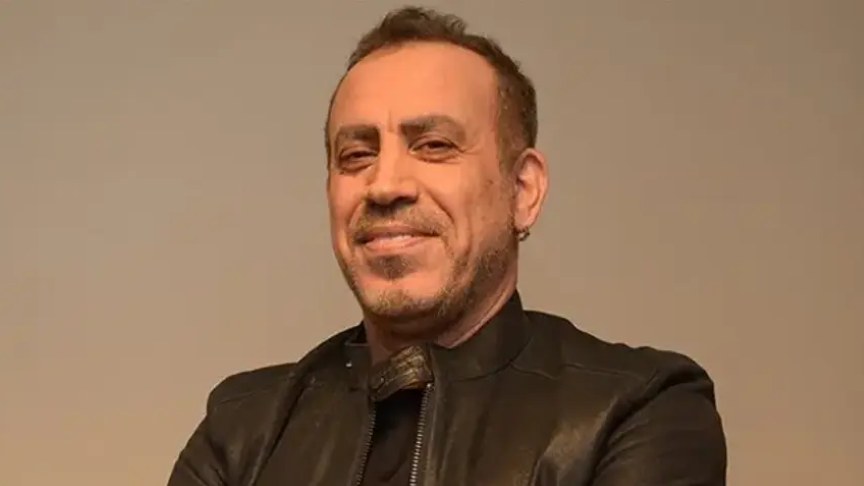
The musician who built the charity that much of Türkiye trusted with its earthquake donations is now in jail. Haluk Levent, the founder of the aid group AHBAP, was detained on 12 July in an İstanbul investigation into where some of the money went, and on 16 July a court ordered him jailed.
Where this stands. This piece is the record of the case through 24 July 2026. On 27 July 2026 an İstanbul court took the administration of AHBAP's entire asset base away from the association, handed it to court-appointed trustees, and recorded that a dissolution process had begun. That decision, and the fourth wave of detentions announced the same day, are covered in a separate piece linked at the foot of this one. What follows here is the case as it stood before the court moved against the institution itself.
The record to 24 July. The investigation has moved outward, from the people who ran AHBAP to the people who vouched for it. Over 22 and 23 July prosecutors summoned 11 public figures, journalists, actors and musicians, to give statements as witnesses, and on 24 July four of them appeared at the İstanbul courthouse in Çağlayan: the journalists Fatih Altaylı, Özlem Gürses and Ruşen Çakır, and the actor Hazal Kaya. All four are listed as people whose information is being sought, not as suspects, and all four left after giving statements. The questions put to them, set out below, went beyond what they knew about the money: prosecutors asked whether they felt responsible for the trust the public placed in AHBAP, and whether their own popularity and earnings had grown because of it. Meanwhile the count of those jailed has reached 28 across three operations, among them Levent and the Babala TV host Oğuzhan Uğur. Earlier, on 20 July, Levent broke his silence in a five-page open letter admitting to gambling and improper borrowing, denying that any donations were stolen, and calling his arrest a setup. He denies wrongdoing, no indictment has been filed, and he has not been convicted of anything. AHBAP as an institution has still not answered the prosecution's specific figures. What follows is what is on the record, and what is not.
What is established
The İstanbul Chief Public Prosecutor's Office opened an investigation into AHBAP Derneği and detained Levent in Bursa on 12 July, according to Anadolu Ajansı, TRT Haber and Sözcü. Police searched the association's İstanbul headquarters, a report from MASAK, the financial-crimes board, entered the case file on 13 July, and a travel ban already placed on Levent was joined by trustees appointed to four connected companies. Justice Minister Akın Gürlek confirmed the investigation after a cabinet meeting and said it could widen.
It did. Over successive operations the number of people detained rose from about 17 in the first hours to 42 by 14 July, across İstanbul, İzmir, Kocaeli and Muğla, and prosecutors added forming a criminal organization and tax-law violations to the conduct they were examining. On 15 July, after questioning, 25 suspects were sent to a criminal judgeship and one was released; prosecutors asked the court to arrest 19 of them.
The court ruled on 16 July. It ordered Levent and 13 others jailed, 14 in all, and placed 11 more under judicial control. Among those jailed are the well-known lawyer Ece Güner and Levent's driver, İlker Çetin. The offenses the case is built on are forming a criminal organization, aggravated fraud, and laundering the proceeds of crime. Arrest, in Turkish law, is detention before trial, not a conviction, and no indictment has yet been filed. Levent's brother, Berkant Acil, was already under arrest in a separate bribery case involving Şile Municipality.
A second wave followed. Of six more suspects the gendarmerie had detained, four were jailed and two placed under judicial control on 16 July, bringing the number held to 18. Prosecutors froze the assets of AHBAP and of the suspects, and a court appointed a panel of experts to examine whether the donations raised after the 2023 earthquakes were spent as intended and within the law, the first formal move to test that question.
The net widened again on 17 July. Prosecutors issued nine more detention orders, and police took in seven suspects, among them Oğuzhan Uğur, the host of the popular interview channel Babala TV, whose home was searched. Uğur was detained for questioning rather than arrested, was due to be brought before the courthouse on 20 July, and the authorities did not immediately set out the grounds for holding him. He had worked alongside AHBAP during the 2023 earthquake response and had drawn criticism for it. Before he was taken in, he had said his own position was clear, that if the relief effort had been abused he would be among the first to demand an accounting and would begin his own legal action. Police began taking statements from that group on 19 July, Uğur's among them, in a set of detainees that Sözcü reported included association staff, financial auditors, and one person who worked in crypto assets.
By 24 July the running total had reached 28 people jailed across three operations, Levent and Uğur among them, according to Hürriyet. Arrest here still means detention before trial. No indictment has been filed against any of them.
The people who vouched for it
On 22 July the prosecutor's office said it would seek information from a set of well-known names: the broadcasters Fatih Portakal, Ece Üner and Öykü Serter, the lawyer Feyza Altun, and the musician Gökhan Özoğuz. TRT Haber reported six more the next day, among them the journalists Fatih Altaylı, Ruşen Çakır and Özlem Gürses, the actor Hazal Kaya, the comedian Şahan Gökbakar and Fatih Koparan.
None of them is a suspect. In Turkish procedure they were called as people whose information is sought, which is the position of a witness, and the distinction matters because it is the one most easily lost in the coverage.
Four arrived at the Çağlayan courthouse on 24 July and left once they had finished. "The prosecutor wanted our information," Özlem Gürses said on the way in. "We came to answer his questions."
What they were asked is the striking part. The prosecutor put it to Ruşen Çakır that "because of the trust created by the use of your name, your identity and your fame, billions of lira evaporated, millions of people were deceived and the needs of thousands of families went unmet," and asked whether he felt responsible. Çakır, a journalist of 41 years, said he did not. Asked separately whether the earthquake period had raised his own profile and brought him money, he said he was already known and had gained nothing, and that the association had been of no benefit to him "material or moral." Asked why he had never checked whether Levent's promises were kept, he said he had never met the man and had no means to check.
Gürses gave the same answer in blunter form. "I do not feel responsible," she said. "I have done nothing that requires an apology." She told prosecutors she had used her posts at the time to argue that AHBAP and the Babala TV broadcasts raising money alongside it should be audited, and that she had hosted Levent once, on the third anniversary of the earthquakes, finding his manner on air offhand enough that she said so to her gallery afterwards. If it turned out donations had been raised on the strength of her standing, she said, she would file a complaint herself.
Note the shape of the questions. They assume the case is proven, that the money evaporated and that millions were deceived, at a point when no indictment has been filed and no court has ruled. That framing belongs to the prosecutor, not to the record.
Hazal Kaya described going to the Babala TV studio during the earthquake response of her own accord, without anyone asking her to, and said she never met Levent in person and spoke to him by phone only once, in 2020, about children with SMA. She donated 120,000 lira herself and, hearing what the file alleges, told prosecutors she considered herself one of those wronged. She wants to know where her money went and said she would use her right to complain if she has to.
Fatih Altaylı, who gave no money, said he had spent years arguing publicly that AHBAP needed independent auditing and that Levent stopped taking his calls after he wrote as much. He has since changed his view of the man. "I see now that I gave support to someone who did not deserve it," he said. "I feel sadness, and even regret."
Their accounts are their own, given as witnesses, and the allegations underlying the questions remain unproven.
What is alleged
Everything in this section is the investigating authorities' claim, not established fact. The prosecutor's office alleges that roughly 120 million lira flowed from AHBAP to accounts used by Levent, one of them registered to his assistant, Yeliz Kaya, and that donations raised after the 2023 earthquakes were taken abroad or spent outside their purpose. It further alleges heavy betting through the accounts of a co-founder, Alper Çelik, that Levent is said to have used.
The betting figures do not line up across the sources, and that gap matters. The prosecutor's summary, carried by AA and DHA, put the wagering at about 990 million lira, with roughly 390 million lost. The MASAK report itself attributes to Çelik a single lost betting coupon of about 190 million lira. And some English-language summaries traced far smaller sums to Levent directly. MASAK's own conclusion is cautious, that it "should be investigated" whether the association was abused, an assessment rather than a finding of guilt.
The sharpest claim came from inside Levent's own circle. His driver of about three and a half years, İlker Çetin, gave testimony under Türkiye's effective-remorse provision, which offers a suspect leniency for cooperating, and told the financial-crimes unit that large transfers through his own bank account were made on Levent's instructions, sent by WhatsApp. Çetin said Levent kept no bank account or card of his own, that money was routed through accounts Levent named, among them Yeliz Kaya's and those of two associates, Zafer Yay and Emrah Gödeliner, and that he had carried large sums of cash in Ankara, including a transfer of about 210 million lira to Kaya. It is a cooperating suspect's account, given in exchange for leniency and untested in court.
That testimony also gave the gambling allegation a place. Levent's casino play, Çetin said, happened in Cyprus, with chips bought through Çetin's account, and the journalist Sema Kızılarslan said the roulette footage circulating of Levent was filmed there, dating his last visit to 11 May 2026. The footage claim is a reporter's, unverified. Investigators separately allege a foiled escape, that Levent went to the airport for a flight to Germany, learned of the travel ban, and was detained in Bursa. That account, too, is the prosecution's.
On 18 July that pattern gained a second cooperating voice. Alper Çelik, the co-founder now jailed and himself seeking effective remorse, told the financial-crimes unit, in an account carried by Anadolu Ajansı, that Levent had used his bank accounts to move money and place bets because Levent's own accounts were blocked. Çelik put his income at about 30,000 lira a month. The file, as read to him, showed far larger sums passing through: about 138.6 million lira into his account from one suspect, Zafer Yay, across more than 1,300 transactions, about 89 million lira from a gaming company, and roughly 279 million lira paid out of it, including about 190 million in losing coupons, close to MASAK's figure. Levent, Çelik said, would message him which matches to bet and at times logged into his betting account directly, and the transfers, among them about 3 million lira to a casino company in Cyprus, were made on Levent's instructions. He cast himself as a man used rather than a partner, saying the debts and the creditors who came after him had cost him his health. Like the driver's, it is a suspect's account given for leniency, and Levent has not answered it.
What the accused say
Levent has denied taking money from the charity throughout. In a statement from custody he insisted his personal debts are separate from AHBAP and are being wrongly tied to it, blaming them on personal stock trading he called a "bad weakness." He admitted using AHBAP's cheques and promissory notes as collateral at times, calling that a possible "irregularity, but not corruption," and said he had never taken the association's money to trade on the markets. He then used his right to silence for part of the questioning; his lawyer, Türkan Özer, said the defense was being restricted, that some of Levent's remarks about political figures and public institutions were kept out of the record, and that the objection was entered into the file.
His fullest account came on 20 July, in a five-page open letter posted to his X account. In it Levent confessed to a gambling addiction and to borrowing from AHBAP in ways he called improper, but insisted that not one lira of the earthquake donations had been stolen and that his personal debts, all of them recorded in the association's decision ledger, were being wrongly recast as theft. He said he had been on the point of repaying the money when he was detained, and alleged that the operation's timing was a deliberate "setup," leveling specific accusations at Justice Minister Akın Gürlek. Those accusations are Levent's own and unproven, and the government rejects them. He closed by urging AHBAP's donors to demand the earthquake-period spending records from the state themselves.
His defense reaches back before the operation. In an Instagram post on 26 June, more than two weeks before his detention, he had answered the questions then circulating about the earthquake donations, writing that the association's accounts for that period had been examined and cleared by Interior Ministry inspectors, that a fresh audit would begin the following month, and that he would set out the spending himself, "kuruş by kuruş." He said he had spent 15 days messaging a deputy interior minister, Bülent Turan, urging the state to "audit everything from the earthquake period to today and share it with the public," and told followers to "wait for the real bomb." Days earlier, on 3 July, after a court fined him 70 million lira over two bounced cheques, he announced he would step down as AHBAP's chair once its projects finished, calling it one of the most-audited NGOs in the country.
Ece Güner, the lawyer now jailed alongside him, had distanced herself before her arrest, saying she was never Levent's lawyer, that she had donated to AHBAP for years like many others, and that she had given him a personal loan she struggled to recover. Since her arrest she has gone further, in messages from prison reported by Sözcü and Halk TV, insisting she has no organic tie to the association, turning sharply on Levent, and protesting that she sits in jail while, she says, AHBAP's own board members were placed under house arrest.
Oğuzhan Uğur, the Babala TV host taken in on 17 July, used his statement to put distance between himself and both Levent and the money. In an account reported by Sözcü, he said he had never worked closely with Levent, did not know his financial affairs, had no commercial dealings with him or the association, and that no money had reached his personal or company accounts. He traced his break with Levent to a private quarrel, a warning from a journalist that Levent had accused him of painting the singer as an opposition figure, then two tense phone calls, after which the two stopped speaking. He said he had come to separate the man from the institution, having seen AHBAP working on the ground in Hatay after the earthquakes. Uğur is detained for questioning, not charged, and his account, like the others, is untested. The report of it is Sözcü's.
One gap should be stated plainly: AHBAP as an institution has not issued a detailed, point-by-point response to the prosecutor's figures. Until it does, the specific accounting rests on one side.
A second case
A separate investigation is running alongside the donations inquiry. Başaran Holding filed a criminal complaint on 29 June accusing Levent, Yeliz Kaya and Esin Önder Çağlayan of taking about 60 million dollars of its assets "by unlawful and fraudulent means." That case is distinct from the AHBAP probe, and the allegation is untested.
A third matter, easily confused with the first two, is the İstanbul Anadolu prosecutor's inquiry into Şile Municipality, in which Levent's brother Berkant Acil is a suspect. Sözcü published Acil's police statement on 23 July. Most of it concerns a music festival and who was entitled to bid for the contract, and Acil denies everything put to him. One passage touches his brother: asked about 1.5 million dollars that passed through his company, Acil said Levent asked him to hold it for a day and then send it on to Yeliz Kaya, that he did so, that he understood the transaction had been declared to the tax office, and that he does not know where the money came from or where it went afterwards. That is one suspect's account in a different case, and it has not been tested either.
Why this lands hard
AHBAP is not a fringe outfit. Levent, an Adana-born arabesque-rock singer, founded it in 2017, and after the February 2023 earthquakes it ran one of the largest civilian relief efforts in the country and drew enormous public trust; he made the TIME 100 that year and had received a state award in 2021. AHBAP also published audits, including an independent one by Grant Thornton that reported about 4.36 billion lira in donations for 2023, with nearly all of it spent on relief. That record of scrutiny is part of why the case unsettles people who gave without a second thought.
It is being read two ways, and the piece adopts neither. One reading, advanced by the prosecutor, MASAK and the Justice Ministry, is a straightforward financial-crime case; Justice Minister Akın Gürlek said the courts act "only according to concrete evidence and the law," not to "perceptions or social-media campaigns." The other, heard mostly in critical outlets and in questions about timing, treats it as pressure on an independent civil-society figure amid a run of investigations that has also touched opposition-run municipalities. What complicates the neat version of that split is that opposition-leaning journalists have been among the sharpest in demanding Levent explain the money. The real division runs between those who presume guilt and those who want a full public accounting, and it cuts across both camps.
For now Levent sits in a cell, and the case moves toward an indictment. The full accounting he promised, kuruş by kuruş, has not been laid out, by him or by the charity he built, but a court has now put a panel of experts on the question.